

Own family facility
You deal directly with the manufacturer. We control planning, quality and pricing ourselves.
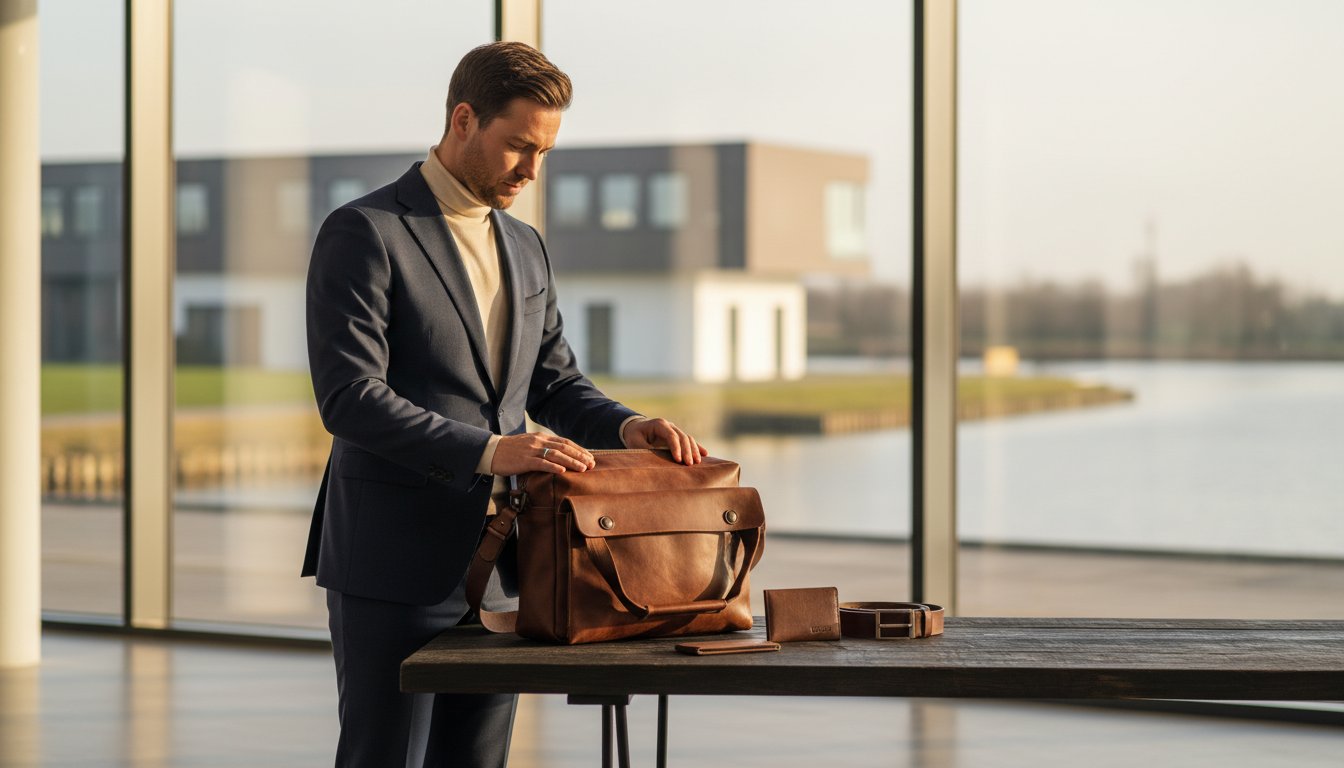
Retailers are currently facing a market where leather goods prices remain elevated by nearly 22%, yet the demand for quiet luxury has never been higher. You’ve likely felt the pressure of inconsistent quality or supply chain shifts, such as the 18% reciprocal tariff applied to Indian imports as of February 2026. Identifying the right trends in men’s leather accessories for retail is no longer just about style; it’s about protecting your margins while offering the tactile quality your customers expect.
We understand that your reputation rests on the intrinsic value of the items you stock. This guide explores how to master the 2026 market by focusing on Tactile Utility and the enduring appeal of full-grain materials that develop a characterful patina over time. You’ll learn which items, from slouchy messenger bags to minimalist RFID wallets, will define the season and how to find a manufacturing partner who shares your commitment to artisanal excellence. We’ll also examine the balance between the new LWG Sustainability System standards and the rising interest in biotech leather alternatives to ensure your inventory meets modern ethical expectations.
Men’s retail is moving away from the ephemeral. By May 2026, the market has seen a distinct rejection of “fast-fashion” leather. Consumers are weary of products that look “cheap” despite premium price tags. Instead, they’re looking for items that tell a story of durability and character. This shift is partly a reaction to the 22% price increase in leather goods since 2024, making every purchase a calculated investment. Men are buying fewer items, but they’re choosing pieces that promise to age gracefully, developing a unique patina over years of use.
This leads us to the defining concept of 2026: Tactile Utility. It’s the mandatory standard for anyone tracking the latest trends in men’s leather accessories for retail. Tactile Utility represents the demand for items that feel artisanal and rugged but perform with technical precision. It’s no longer enough for a bag to look good; it must solve the problems of a hybrid, work-from-anywhere lifestyle. Designers are now focusing on the physical sensation of the leather, using pebble grains and suedes to create a experience that synthetic alternatives simply can’t replicate.
To better understand how these style shifts translate to the modern consumer, watch this helpful video:
Clean lines remain popular, but the “Quiet Luxury” trend has evolved. In the B2B sector, retailers are noticing that simple silhouettes must now hide complex functionality. A briefcase isn’t just a container; it’s a mobile office with dedicated, padded compartments. This evolution draws heavily from the rich history of leather craftsmanship, where every stitch served a structural purpose. In 2026, meaningful design means your inventory must offer a tangible sense of quality that justifies its shelf space. Understanding these trends in men’s leather accessories for retail is essential for staying ahead of the shift toward investment-grade products.
Modern shoppers don’t just want a wallet; they want peace of mind. As digital security becomes a primary concern, RFID-protected linings have transitioned from an optional feature to a retail baseline. This is especially true for wholesale small leather goods. Buyers are prioritizing accessories that integrate built-in protection and modularity. Whether it’s a cardholder with a spring-loaded mechanism or a laptop bag with integrated cable management, the trend is about accessories that work as hard as the professionals who carry them. By offering products that combine this technical edge with premium full-grain leather, you provide the value that today’s discerning B2B client demands.
The hybrid professional doesn’t just need a bag; he needs a system that adapts to a fluid schedule. As we look at the trends in men’s leather accessories for retail in 2026, the focus has shifted toward high-utility items that maintain an executive aesthetic. Retailers are moving away from generic designs to stock pieces that solve specific modern problems, like digital security and modular storage. This strategic inventory selection is vital, especially since Leather Goods Market Trends indicate a steady rise in men’s demand for premium, multi-functional leather items.
In 2026, RFID-blocking technology isn’t a premium add-on; it’s a retail baseline. Consumers expect their wallets to protect their data as much as their cash. While traditional bifolds remain a staple for their characterful aging process, slim cardholders are seeing a surge in popularity. These smaller items allow for higher margins and serve as an excellent entry point for new customers. Many boutiques are now expanding their reach by stocking wholesale leather handbags and professional portfolios to cater to the growing number of men who prioritize organized, high-end carry solutions. A minimalist leather pouch or a sleek money clip wallet can often be the “impulse buy” that drives significant revenue at the checkout counter.
The transition from the office to the airport has never been more seamless. The 2026 executive favors modular laptop bags that offer ergonomic support without sacrificing the supple feel of full-grain leather. Along with these, the “new” duffel bag has emerged as an essential. No longer relegated to the gym, these bags are crafted from sturdy, characterful leather and designed for three-day business trips. They offer a sophisticated alternative to hardshell carry-ons, fitting perfectly with the “Quiet Luxury” aesthetic.
The surprise growth category for 2026 is the men’s crossbody bag. Once considered a niche fashion statement, it’s now a practical necessity for carrying phones, chargers, and everyday essentials in a hands-free manner. These bags are particularly successful when they feature the “Tactile Utility” mentioned earlier, combining rugged textures with refined hardware. If you’re looking to refresh your collection with these high-demand items, you can explore our wholesale leather collection to find pieces that resonate with the modern professional. By focusing on these core categories, you ensure your retail space remains relevant and profitable in an increasingly discerning market.
Retailers in 2026 are finding that “green” is the color of profit. Consumer expectations have shifted from passive interest to active scrutiny. By mid-2026, the Leather Working Group (LWG) has fully transitioned to its new Sustainability System. This updated protocol consists of a Leather Production Standard, a Chain of Custody Standard, and a Decarbonisation Framework. For a business, stocking items that carry these certifications isn’t just about ethics; it’s about meeting a baseline requirement for the modern luxury shopper. Understanding these trends in men’s leather accessories for retail allows you to speak the language of your most loyal customers: those who value longevity over disposability.
The “life-cycle” value of a product has become a primary selling point. While fast-fashion items are often discarded within a single season, a high-quality full-grain leather bag is sold with the promise of a decades-long lifespan. We believe leather is a living material. It records the journey of its owner through a developing patina that only grows more beautiful with time. This inherent durability is what makes premium leather a sustainable choice in a world increasingly focused on reducing waste and environmental impact.
The market for leather alternatives has matured significantly. In 2026, we see a clear split in the trends in men’s leather accessories for retail based on demographic values. While many traditionalists prefer the heritage of genuine hide, roughly 62% of Gen Z consumers actively seek out plant-based or biotech leather. These aren’t the “plastic” pleathers of the past. Today’s high-quality vegan leather bags utilize lab-grown fibers and bio-healed materials that offer a remarkably supple hand-feel. By offering a curated selection of both genuine and plant-based options, you ensure your retail space remains inclusive and forward-thinking.
Transparency has replaced the vague “imported” tag on the retail floor. Today’s buyers want to know the story behind the stitch. This makes it vital to carefully vet your leather goods manufacturer for social compliance and fair labor practices. At Adnan Lederwaren, we combine global production capabilities with rigorous Dutch quality control. This hybrid approach ensures that every apron, belt, or backpack meets the highest standards of craftsmanship and human dignity. When you can prove that your products are made under ethical conditions, you build a level of trust that no discount or marketing campaign can replicate.
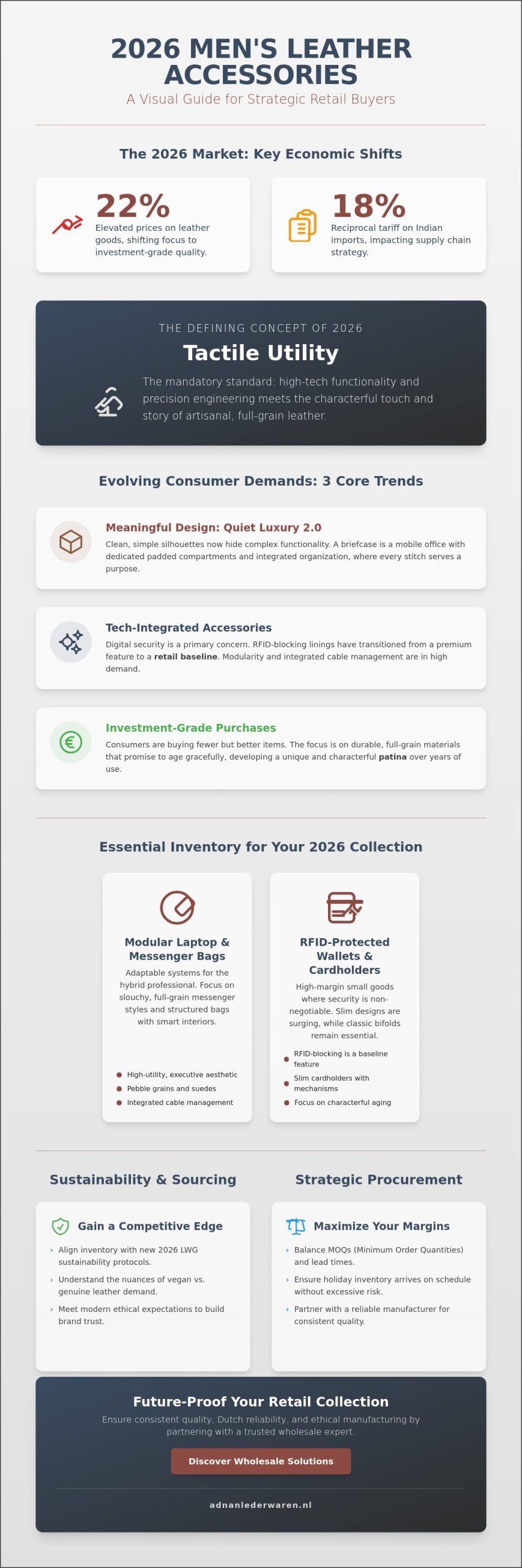
Strategic buying is the quiet engine of retail profitability. While aesthetic appeal draws customers in, the logistics of your supply chain determine whether those sales translate into sustainable growth. As we move through 2026, the 18% reciprocal tariff on leather goods from India and the 0.3464% Merchandise Processing Fee (MPF) have made precision in procurement more vital than ever. Retailers who successfully master the trends in men’s leather accessories for retail are those who balance the allure of “Tactile Utility” with a cold-eyed look at wholesale logistics.
Successful seasonal planning requires a long-term view. For the 2026 holiday season, orders should be finalized no later than July to account for potential shipping bottlenecks and the mandatory customs clearances now required since the suspension of the “de minimis” rule in August 2025. We recommend a hybrid sourcing model that leverages the deep history of Indian leather work while maintaining strict Dutch quality oversight. This approach ensures that every backpack or duffel bag meets European standards of durability without the inflated costs often associated with fully domestic production.
Before committing to a bulk order, you must vet the structural integrity of the goods. Ask your partner for specific data on leather thickness, typically 1.2mm to 1.5mm for sturdy bags, and the tensile strength of the hardware. A reliable partner will always provide samples. We believe that testing the “hand-feel” of a sample is the only way to ensure the leather isn’t a corrected-grain substitute that looks “cheap” under retail lights. If a manufacturer hesitates to discuss their sourcing transparency or LWG compliance, it’s often a sign of future supply chain volatility.
Your inventory should be a conversation between stable revenue and high-growth trends. While large investment pieces like leather laptop bags anchor your brand’s authority, small leather goods (SLGs) are the champions of the checkout counter.
Finding the right balance in your Minimum Order Quantities (MOQs) allows you to test new styles without overextending your capital. If you’re ready to build a collection that combines artisanal pride with business reliability, you can view our wholesale partnership options to see how we support retail growth. By prioritizing quality over quantity, you protect your margins and build a reputation for excellence that lasts well beyond the 2026 season.
Choosing a wholesale partner in 2026 requires more than just a transaction. It’s about finding a collaborator who understands the nuances of the market and the intrinsic value of a well-crafted product. Our 2026 collection serves as a masterclass in Tactile Utility, providing the technical performance modern men demand without sacrificing the soulful feel of premium leather. By integrating our pieces into your inventory, you’re not just following the trends in men’s leather accessories for retail; you’re setting a standard for quality that your customers will recognize the moment they touch the material.
The Adnan Advantage is built on three pillars: premium full-grain leather, ethical production, and Dutch reliability. We don’t believe in the shortcuts of mass production. Every wallet, laptop bag, and leather apron in our collection is designed to be characterful and sturdy. We understand that your reputation as a retailer depends on the longevity of the items you sell. That’s why we focus on materials that age beautifully, ensuring that a purchase made in 2026 remains a prized possession for years to come.
Adnan Lederwaren is a family-led business born from a deep passion for natural materials. We’ve always believed that the best leather goods are those that respect the history of the craft. Our commitment to using only high-quality full-grain hides means our products are naturally supple yet incredibly resilient. This dedication to traditional craftsmanship allows us to offer a collection that stands apart from the “cheap” look of corrected-grain alternatives. When you partner with us, you’re sharing a story of heritage and authenticity with your clientele.
Reliability is the foundation of a successful retail partnership. From our central hub in Almere, we manage bulk distribution and worldwide shipping with the precision you expect from a Dutch partner. We’ve optimized our logistics to help you stay ahead of the trends in men’s leather accessories for retail, ensuring that your seasonal stock arrives exactly when you need it. Whether you’re looking for our branded collection or interested in our private label services to build your own ambitious retail brand, our team is ready to support your growth.
We invite you to experience the quality of our craftsmanship firsthand. Ambitious retail brands can access our 2026 B2B catalog and wholesale pricing by reaching out to our team for a personalized consultation. We’ll work with you to curate a product mix that maximizes your margins and delights your customers. Let’s build a future-proof collection together, rooted in the timeless elegance of genuine leather.
The 2026 market demands a delicate balance between technical innovation and the timeless character of natural materials. As you navigate the shifting trends in men’s leather accessories for retail, your success depends on providing items that justify their investment through durability and ethical transparency. We’ve seen how “Tactile Utility” and the rise of RFID-protected essentials have redefined the modern storefront, moving away from disposable fashion toward lasting value.
Since 2010, Adnan Lederwaren has operated as a specialized B2B manufacturer, bridging the gap between traditional craft and professional retail requirements. Our hub in Almere provides rigorous Dutch quality control for every item we produce, from characterful full-grain backpacks to innovative vegan leather solutions. We support your growth with reliable worldwide shipping and deep expertise in the current regulatory environment. It’s our passion to ensure your inventory reflects the same pride we take in our craftsmanship.
Ready to elevate your inventory with pieces that age beautifully? Explore our 2026 B2B Leather Collection and Request a Quote. We look forward to helping you build a collection that resonates with the quality-conscious professional.
Earthy, muted tones like deep forest green, chocolate brown, and charcoal are the dominant colors for the 2026 season. These shades align with the “Quiet Luxury” movement that favors subtle elegance over flashy branding. Retailers are seeing a 15% increase in demand for “natural” dyes that highlight the leather’s grain rather than masking it with heavy pigments. These colors provide a versatile foundation for both professional and casual wardrobes.
High-quality biotech vegan leather can match the initial durability of mid-grade genuine leather, but it doesn’t yet equal the decades-long lifespan of full-grain hide. While bio-healed materials introduced in 2025 offer excellent scratch resistance, they lack the ability to develop a natural patina. For retail products intended as “heritage” pieces, genuine leather remains the superior choice for longevity and its unique aging process.
Retailers can verify quality by inspecting the grain density and the burnish on the edges of the product. Genuine full-grain leather should show slight natural imperfections and have a distinct, earthy scent rather than a chemical one. It’s essential to request a cross-section sample to ensure the material isn’t bonded leather. Bonded leather often contains 80% scrap fibers and lacks the structural integrity required for premium retail collections.
Minimum Order Quantities (MOQs) for custom leather accessory manufacturing typically start at 50 to 100 units per style for specialized workshops. This flexibility allows smaller boutiques to test trends in men’s leather accessories for retail without the risk of excessive unsold inventory. Larger manufacturers may require 300 units or more, but family-led operations often provide more accessible terms to support the growth of ambitious retail brands.
RFID-blocking wallets have transitioned from a trend to a mandatory retail baseline in 2026. Data from early 2025 indicates that 85% of men’s wallet shoppers now specifically look for technical protection as a primary feature. Stocking RFID-integrated bifolds and cardholders is no longer about following a fad. It’s about meeting a fundamental consumer expectation for digital safety as part of the broader trends in men’s leather accessories for retail.
Full-grain leather is preferred because it’s the strongest part of the hide and develops a unique character over time. Unlike corrected-grain or top-grain leathers that are sanded down, full-grain retains its natural fibers and resilience. This results in a product that doesn’t just last; it actually improves with age. This life-cycle value is a critical selling point for the 2026 consumer who prioritizes investment-grade accessories over fast fashion.
Dutch quality control ensures that the artisanal skill of Indian leather workers meets strict European durability and social compliance standards. By performing final inspections at our Almere hub, we eliminate the 12% defect rate often seen in unmonitored global shipments. This model provides retailers with the cost benefits of international production while guaranteeing the hand-feel and hardware reliability expected of a premium, characterful brand.
The best way to care for premium inventory is to maintain a stable humidity level of 40% to 50% in your storage area. You should avoid direct sunlight, which can cause colors to fade by up to 20% over a single season. Regularly rotating items on display and using acid-free tissue paper for stuffing helps maintain the bag’s shape. This prevents the leather from drying out or cracking while it waits for a customer.


You deal directly with the manufacturer. We control planning, quality and pricing ourselves.

One point of contact from first question to delivery. English, Dutch and German.

Approve a physical sample first. We are happy to sign your NDA.

Incoming leather, after cutting, during production, and a final inspection before dispatch.
 English English
 Nederlands
 Deutsch
 Français
 Italiano
 Español
Comments are closed.