



Own family facility
You deal directly with the manufacturer. We control planning, quality and pricing ourselves.
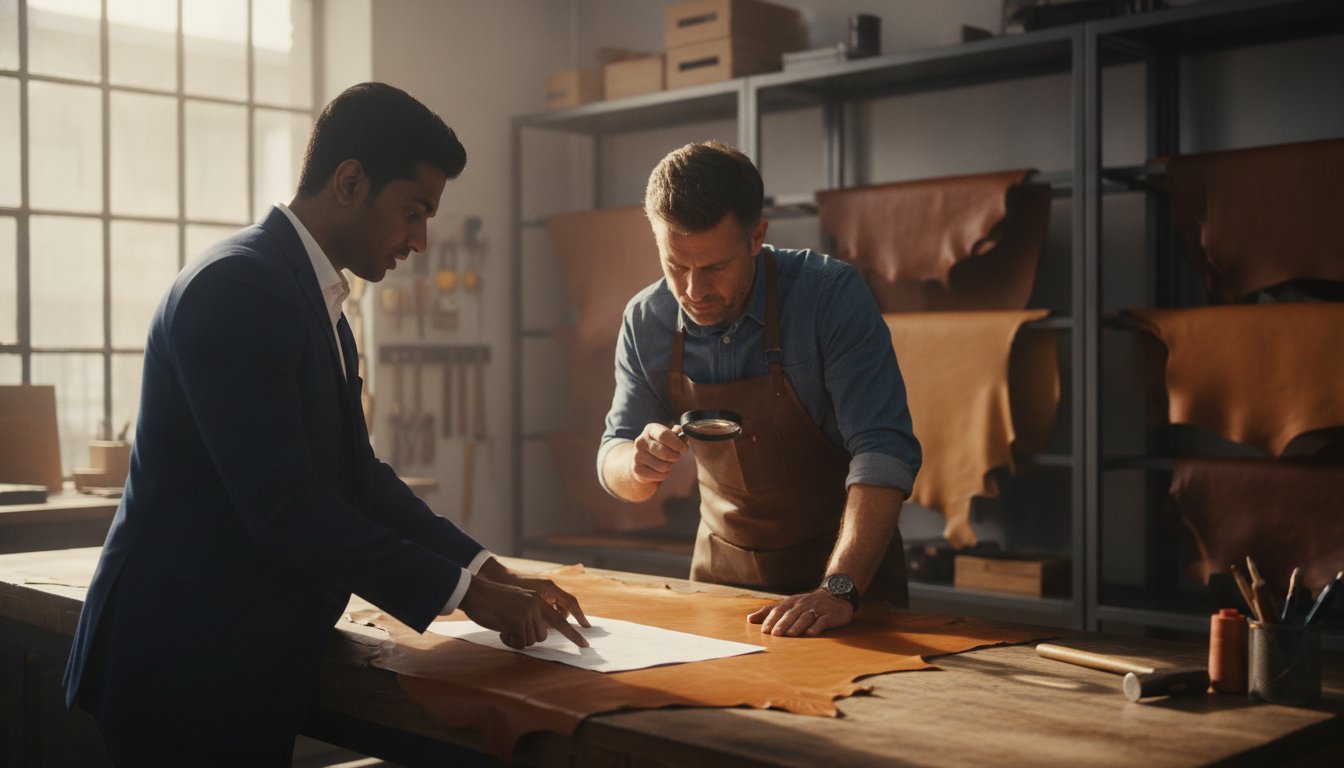
European brands and retailers who have leather goods made usually choose between three set-ups: a manufacturer that produces in Europe, a manufacturer that produces outside Europe and sells directly, or a company with a contact point in Europe and its own production elsewhere. Each has its own strengths. This guide explains the differences, what to check with any partner, and how to compare quotations on the same basis.
| Set-up | What it means | Points to weigh |
|---|---|---|
| Production in Europe | The goods are made in an EU country | Short transport, same time zone; capacity and minimums vary widely, and costs are usually higher |
| Direct from a manufacturer outside Europe | You deal directly with the production company abroad | Wide capacity; communication, time zones, import formalities and quality follow-up are your responsibility |
| European contact point with own production elsewhere | Coordination in Europe, production in the company’s own facility abroad | One contact in your time zone and language; ask who owns the facility and how quality is checked |
None of these is right for every brand. What matters is that you know which set-up you are buying from, because it affects lead times, minimums, communication and who is responsible for what.
Quotations are only comparable when they cover the same things. Check for each offer:
Most delays in leather goods projects come from unclear briefs and slow answers, not from production itself. A contact who works in your time zone, answers in your language and knows your file shortens every round of questions, from the first sketch to the repeat order.
Customer coordination and project management are handled from Almere, the Netherlands; production and quality control take place in our family’s own SA8000-certified facility in Kolkata, India. Your account manager handles your project from the first question to delivery, in English, Dutch or German.
No. Customer coordination and project management are handled from Almere, the Netherlands. Production and quality control take place in our family’s own SA8000-certified facility in Kolkata, India.
For EU and UK deliveries, duties are included at no extra shipping charge. For the UK, import VAT is paid by the customer.
Ask your account manager. Independent inspections before dispatch can be arranged on request.
Want to compare your options in detail? See how private label leather goods work, or request a quote for your project.
You deal directly with the manufacturer. We control planning, quality and pricing ourselves.

One point of contact from first question to delivery. English, Dutch and German.

Approve a physical sample first. We are happy to sign your NDA.

Incoming leather, after cutting, during production, and a final inspection before dispatch.
Comments are closed.