


Own family facility
You deal directly with the manufacturer. We control planning, quality and pricing ourselves.
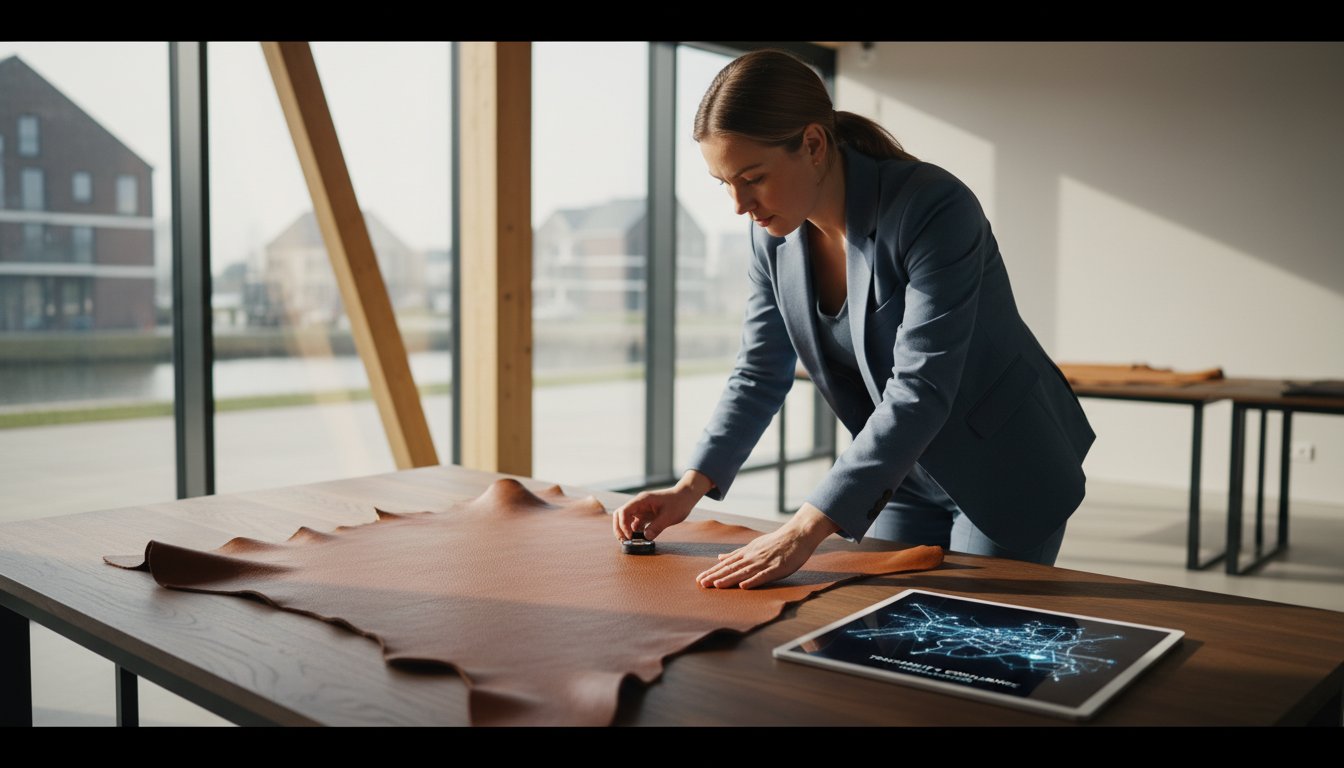
Under the amended European Union rules, Member States must transpose the Corporate Sustainability Due Diligence Directive (CSDDD) by 26 July 2028 and apply it from 26 July 2029. Sourcing sustainable and ethical leather for retail is therefore a long-term procurement priority for brands that need verifiable supplier information, responsible sourcing evidence and durable products.
We believe that a truly high-quality product is born from a harmonious balance of artisanal pride and transparent business practices. This guide will help you master the complexities of ethical leather procurement so you can build a verifiable, high-quality supply chain for your retail brand. You’ll learn how to secure characterful, full-grain materials that meet 2026 regulations without compromising the timeless class your customers expect. It’s about creating products that become more beautiful with age while standing up to rigorous legal and ethical scrutiny.
We’ll examine the specific compliance benchmarks for the upcoming year, the technical differences between genuine sustainability and superficial claims, and the practical steps to vet tanneries for long-term reliability.
In the 2026 retail environment, sustainability isn’t just a buzzword; it’s a measurable standard of circularity. When Defining Sustainable Leather, we must look beyond marketing jargon and focus on how materials interact with our planet’s ecosystems. Sourcing sustainable and ethical leather for retail now requires a deep understanding of the material’s origin as a byproduct of the food industry. Authentic sustainability centers on the shift from “eco-friendly” labels to verifiable practices that ensure every part of the animal hide is utilized effectively.
To better understand these ethical choices and how they impact the wider industry, watch this helpful video:
The leather industry serves a critical role in the global circular economy by upcycling what would otherwise be waste. Industry data confirms that the leather sector prevents approximately 10 million tonnes of hides from entering landfills annually. By transforming these hides into durable goods, we reduce the methane emissions associated with decomposing organic matter. Sourcing from local farming communities adds another layer of ethics, as it supports small-scale agriculture and ensures shorter supply chains. It’s also vital to recognize that many “vegan leather” alternatives are often more environmentally damaging. These synthetic materials rely heavily on plastics and fossil fuels, whereas responsibly sourced animal hides are natural and biodegradable.
True sustainability in leather isn’t just about the tanning process; it’s about how long the product stays in use. High-quality quality leather craftsmanship ensures that a wallet or bag lasts decades rather than months. Full-grain leather is the gold standard for B2B buyers because it retains the hide’s natural strength and grain. Unlike corrected-grain options that use heavy chemical finishes to mask imperfections, full-grain leather develops a characterful patina over time.
This aging process adds value and beauty, which actively discourages the “throwaway” culture inherent in fast fashion. When sourcing sustainable and ethical leather for retail, prioritizing full-grain materials is a strategic move for any business. It reduces waste by ensuring the consumer won’t need a replacement for years. Choosing items that age gracefully allows retailers to offer products with a soul, reflecting a commitment to both the environment and the customer’s long-term satisfaction.
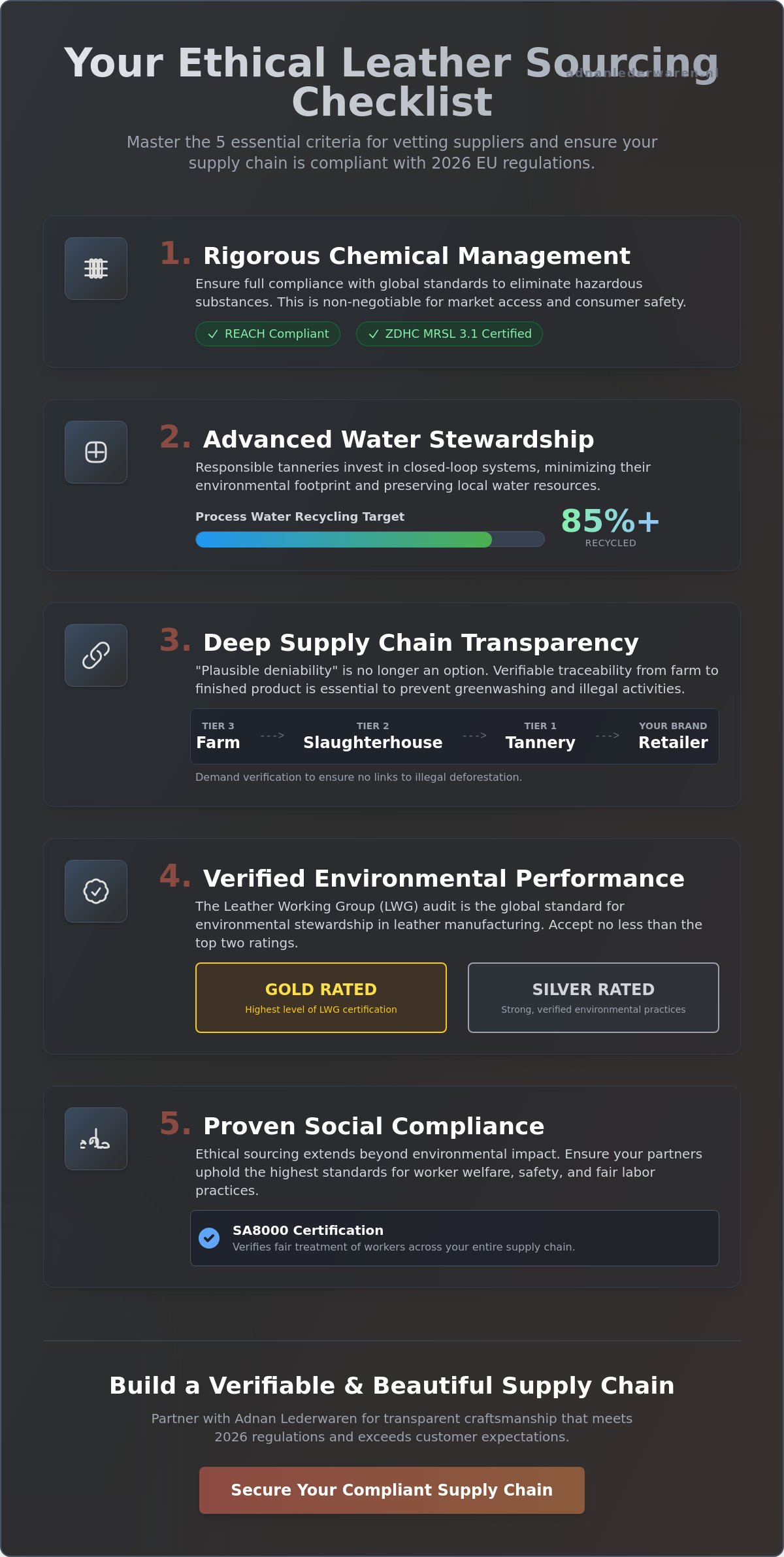
Sourcing sustainable and ethical leather for retail requires a shift from surface-level checks to deep-tier audits. In 2026, retailers must verify that their partners don’t just talk about sustainability but prove it through rigorous, verifiable data. This begins with five core pillars that define a truly responsible tannery. A supplier’s commitment to these standards ensures the longevity of your brand’s reputation and the quality of the final product.
First, chemical management is paramount. Compliance with REACH and ZDHC (Zero Discharge of Hazardous Chemicals) is a non-negotiable requirement. The ZDHC MRSL 3.1 guidelines, updated in late 2022, set the modern standard for banning harmful substances in leather processing. Second, evaluate water treatment systems. A top-tier facility should recycle at least 85% of its process water to minimize environmental impact. Third, demand transparency into tier-2 and tier-3 origins. This includes knowing where the slaughterhouses and farms are located to ensure no links to illegal deforestation.
The Leather Working Group (LWG) remains the benchmark for environmental performance, measuring energy consumption, water usage, and waste management. When reviewing certificates, professional buyers in 2026 prioritize the “Traceable” rating. This ensures raw hides are tracked back to their source, a critical factor for EU Deforestation Regulation (EUDR) compliance. You can find more details on these benchmarks in these 5 Essential Criteria for Evaluating Ethical Leather Suppliers. Beyond LWG, certifications like Cradle to Cradle Gold or ToxFMD provide additional security regarding the leather’s entire lifecycle and chemical toxicity levels.
Ethics go beyond the environment; they focus on the people behind the craft. In production hubs like India, which accounts for approximately 13% of the world’s leather production, social compliance audits are vital. Look for SA8000 certifications to ensure workers receive fair wages and operate in safe conditions. At Adnan Lederwaren, we believe that sourcing artisan-quality leather goods depends on long-term partnerships rather than transactional sourcing. This stability allows for regular on-site quality control and third-party audits. Building these relationships ensures that the character of the leather reflects the integrity of the hands that shaped it, resulting in products that age beautifully and last for decades.
Scaling a retail business while maintaining a commitment to the planet requires a shift from transactional buying to strategic partnerships. When sourcing sustainable and ethical leather for retail, the most immediate challenge involves Minimum Order Quantities (MOQs). Specialized hides, such as those tanned with rhubarb or mimosa extracts, often require tanneries to run dedicated batches. By 2026, standard MOQs for LWG-certified (Leather Working Group) hides typically range between 500 and 1,000 square feet per color. Retailers can manage these requirements by consolidating their color palettes, focusing on three to four core shades that work across multiple product lines.
Lead times also demand a more disciplined approach. Working with certified tanneries often adds 4 to 6 weeks to the production cycle because natural tanning processes cannot be rushed without compromising the leather’s character. Transitioning a traditional line doesn’t have to happen overnight. Successful retailers often introduce a “heritage” capsule collection, representing 15% of their total inventory, to test market response before converting the entire catalog. This phased approach allows for a gradual adjustment of wholesale pricing and retail margins without shocking the existing customer base.
The “ethical premium” is no longer a barrier; it’s a value proposition. Market data from 2024 suggests that consumers are willing to pay a 10% to 15% price increase for products with transparent supply chains. When you offer wholesale leather handbags with ethical backing, you aren’t just selling a container for personal items. You’re selling a story of craftsmanship and responsibility. This narrative builds deep brand loyalty that transcends seasonal trends. High-quality full-grain leather lasts five times longer than synthetic alternatives, which significantly reduces return rates and increases the lifetime value of each customer.
Effective inventory management prevents the waste that contradicts the very principles of sustainability. Retailers should focus on forecasting demand for timeless, classic designs rather than chasing fleeting “fast fashion” cycles. A minimalist aesthetic ensures that unsold stock remains relevant in the following season, protecting your bottom line. It’s vital to partner with a leather goods manufacturer that understands flexible production. Smaller, more frequent production runs help align stock levels with real-time sales data. This agility is essential when sourcing sustainable and ethical leather for retail, as it allows you to respond to shifts in consumer preference without being burdened by excess material waste.
The regulatory landscape for the leather industry is undergoing its most significant transformation in decades. The EU Strategy for Sustainable and Circular Textiles mandates that by 2030, all textile products sold within the European Union must be durable, repairable, and free from hazardous substances. For professionals sourcing sustainable and ethical leather for retail, this isn’t a distant goal but a current operational requirement. The European Commission’s focus on “fast fashion being out of fashion” directly impacts how leather goods are designed and marketed, pushing the industry toward a model where longevity is the primary metric of value.
A central pillar of this transition is the Digital Product Passport (DPP), which will likely become mandatory for leather goods by 2026 under the Ecodesign for Sustainable Products Regulation (ESPR). This digital identity card provides consumers and regulators with instant access to a product’s environmental footprint and circularity credentials. Simultaneously, the EU Deforestation Regulation (EUDR) requires businesses to prove that their leather does not contribute to forest degradation. As of December 30, 2024, large operators must provide geolocation coordinates for the farm where the raw material originated. Failure to comply can result in fines of at least 4% of a company’s annual EU turnover, making transparency a matter of financial survival.
Retailers are moving away from vague “Made in” labels toward precise “Sourced in” data. By using RFID chips embedded in hides or blockchain-backed ledgers, we can now track a piece of leather from the specific cattle ranch to the final stitching room. It’s no longer enough to trust a supplier’s word; retailers must actively verify supply chain claims. This shift ensures that the ethical treatment of animals and the protection of biodiversity are documented facts rather than marketing slogans. It’s about honoring the material’s origin with the same respect we show the finished craft.
Compliance also extends to the chemistry of the craft. REACH standards currently restrict over 60 hazardous substances in leather finishes, but the 2026 horizon brings even stricter limits. The industry is preparing for a phase-out of certain bisphenols and PFAS chemicals often used for water resistance. To prepare for regulatory audits, your business should maintain a rigorous archive of Material Safety Data Sheets (MSDS) and Leather Working Group (LWG) audit scores. Documenting these details protects your brand and reinforces the integrity of the products you offer to your customers.
Discover how we combine traditional craftsmanship with modern transparency by exploring our collection of ethically sourced leather goods today.
Adnan Lederwaren bridges the gap between European quality standards and traditional Indian manufacturing expertise. We’ve developed a hybrid model where Dutch quality control oversees every step of our Indian production facilities. This ensures that when you’re sourcing sustainable and ethical leather for retail, you receive goods that meet rigorous durability tests. We strictly use full-grain leather, which is a natural byproduct of the meat and dairy industries. By utilizing hides that would otherwise become waste, we contribute to a circular economy while providing retailers with material that develops a unique patina over time.
Our B2B operations are built on radical transparency. We manage the entire lifecycle from initial design sketches to bulk delivery, ensuring 100% visibility into the supply chain. Many retailers struggle with opaque manufacturing processes; we solve this by providing direct communication channels. Whether you need a custom collection or a standard order, our ethical standards remain non-negotiable. We don’t just sell bags. We provide a partnership rooted in integrity and a shared passion for natural materials. Our process includes:
As a family-led business, personal accountability is the foundation of every order. We focus on timeless designs that resist the “throwaway” culture prevalent in modern fashion. Our leather goods are built to last decades, not just a few seasons. You have direct access to our expert team to co-create custom sustainable collections that align with your brand’s values. This hands-on approach ensures your inventory reflects the craftsmanship your customers demand, with every stitch accounted for by our specialists.
Transitioning your supply chain is a significant move for any retailer. We make the process simple. You can request a sample to feel the texture and strength of our leather before committing to a larger order. Our onboarding process for B2B partners is streamlined, focusing on clear logistics and reliable delivery timelines. When sourcing sustainable and ethical leather for retail, the right partner makes all the difference in maintaining consumer trust.
Ready to elevate your inventory?
View our collection of ethical leather goods
The retail landscape in 2026 demands more than just a beautiful product; it requires a transparent narrative backed by verifiable data. Success now depends on navigating the EU’s strict traceability requirements and ensuring every hide meets LWG-certified standards. By prioritizing these elements, you protect your brand’s reputation while meeting the growing consumer demand for items that age with character and integrity. It’s no longer enough to claim sustainability; you must prove it through every step of the supply chain.
Adnan Lederwaren has been refining this balance since 2010. We combine specialized B2B expertise with strict Dutch quality control standards to ensure your collections are both scalable and responsible. Our deep-rooted partnerships with LWG-certified tanneries mean you won’t have to choose between high-volume production and artisanal quality. When sourcing sustainable and ethical leather for retail, working with a partner who understands the nuances of full-grain materials and global compliance is essential. We’re here to help you build a legacy of quality that lasts for decades. Let’s create something timeless together.
Partner with Adnan Lederwaren for your sustainable leather sourcing
Leather remains a sustainable choice because it’s a natural co-product of the food industry that prevents 7 million tons of hides from entering landfills annually. In 2026, the focus has shifted toward chrome-free tanning and circular business models. High-quality full-grain leather products often last over 20 years, which significantly reduces the environmental impact compared to synthetic fast-fashion alternatives that typically fail within 24 months.
The most ethical method involves partnering with tanneries in hubs like Chennai that utilize Zero Liquid Discharge (ZLD) systems to recycle 95% of their water. You should prioritize suppliers who hold an LWG Gold rating and provide SA8000 certification to guarantee fair wages for artisans. Adnan Lederwaren maintains these high standards to ensure that every piece of leather reflects both artisanal pride and social responsibility.
You can identify greenwashing by looking for vague claims like “naturally sourced” that lack specific data or third-party verification. Genuine manufacturers will provide a Life Cycle Assessment (LCA) or a detailed chemical management plan from the last 2 years. If a supplier can’t show a clear chain of custody or hides their Tier 2 and Tier 3 providers, they’re likely masking unsustainable practices with marketing jargon.
Look for the Leather Working Group (LWG) certification and the OEKO-TEX Leather Standard to ensure your supply chain is clean. These benchmarks are essential when sourcing sustainable and ethical leather for retail because they regulate chemical inputs and energy use. Additionally, the ZDHC (Zero Discharge of Hazardous Chemicals) roadmap provides a transparent framework for monitoring environmental impact throughout the entire production cycle in 2026.
Real leather is frequently more sustainable because 80% of synthetic “vegan” options are still made from petroleum-based plastics like PVC. These materials release microplastics and don’t biodegrade, whereas vegetable-tanned leather is a natural material that decomposes safely. While plant-based lab-grown hides are improving, the 20-year durability of a well-crafted leather bag offers a much lower carbon footprint over its total lifespan.
The EU Digital Product Passport requires all leather goods sold in Europe to carry a scannable data carrier by 2026. This digital record must disclose the product’s origin, material composition, and repairability scores to consumers. It forces a new level of transparency in sourcing sustainable and ethical leather for retail, ensuring that every brand can prove its environmental claims through a verifiable, decentralized database.
Minimum Order Quantities (MOQs) for ethical leather typically start at 50 units per style for boutique workshops. Larger tanneries focusing on sustainable batches often require at least 300 units to offset the costs of eco-friendly tanning agents. We focus on balancing these requirements to help retail partners maintain lean inventories while still accessing the characterful, high-quality leather that defines our artisanal collections.
You should request a Sedex Members Ethical Trade Audit (SMETA) report conducted within the last 12 months. This audit evaluates labor standards, health and safety, and business ethics based on International Labour Organization (ILO) conventions. If you can’t visit the site personally, hiring a third-party firm like Intertek to perform unannounced inspections is the most reliable way to ensure artisans work in a safe, respectful environment.


You deal directly with the manufacturer. We control planning, quality and pricing ourselves.

One point of contact from first question to delivery. English, Dutch and German.

Approve a physical sample first. We are happy to sign your NDA.

Incoming leather, after cutting, during production, and a final inspection before dispatch.
 English English
 Nederlands
 Deutsch
 Français
 Italiano
 Español
Comments are closed.