



Own family facility
You deal directly with the manufacturer. We control planning, quality and pricing ourselves.
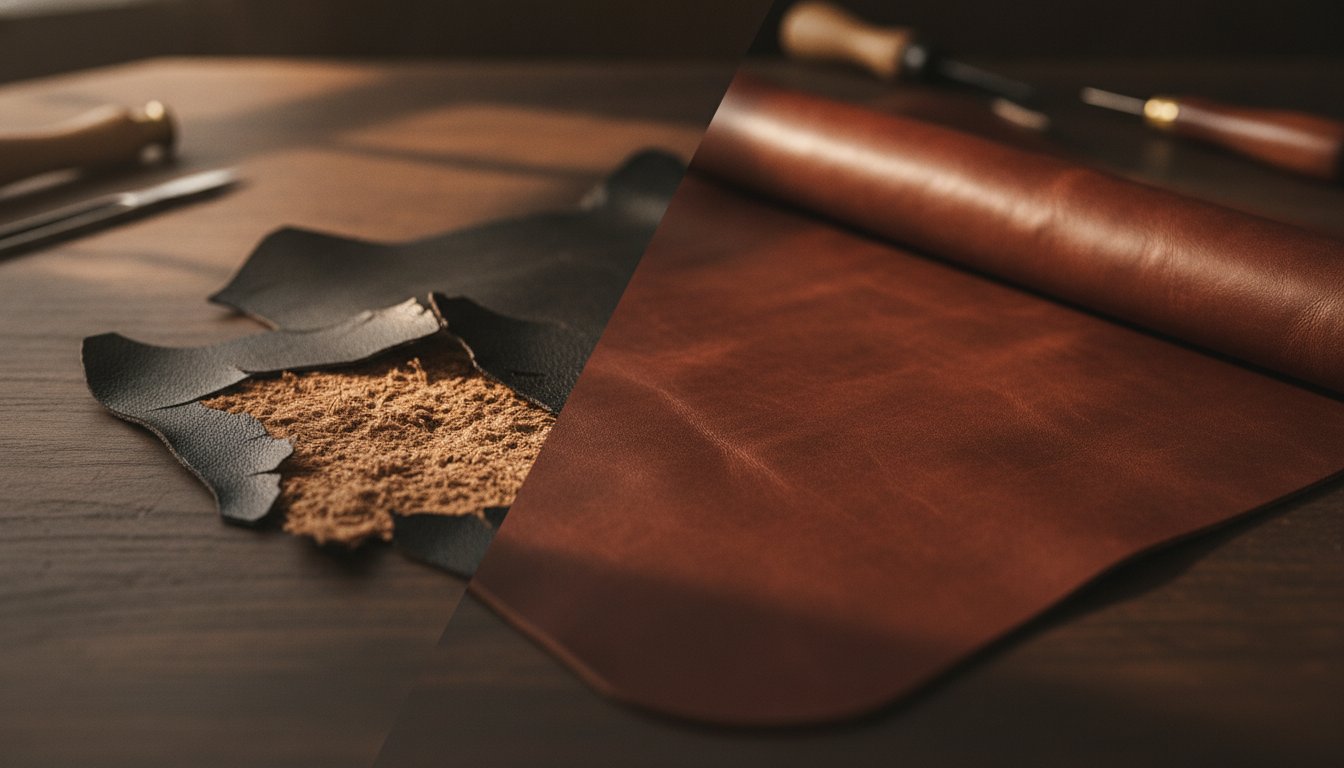
Bonded leather looks like leather in a shop, but it behaves very differently in use. For a brand or retailer, knowing what it is and how to spot it protects you from returns and complaints. This guide explains how bonded leather is made, how it compares with genuine leather grades, and when it may or may not make sense.
Bonded leather is made from leather scraps and fibres that are ground up, mixed with a binder such as polyurethane or latex, and pressed into a sheet on a backing. The surface is then coated and embossed with a grain pattern. The share of real leather fibre varies widely between products.
| Material | What it is | Wear |
|---|---|---|
| Full grain leather | Top layer of the hide, grain intact | Very hard-wearing; develops a patina |
| Top grain leather | Top layer, surface lightly sanded and finished | Hard-wearing; even look |
| Split leather | Lower layer of the hide, often suede or coated | Less strong than top-layer leather |
| Bonded leather | Leather fibres bound with adhesive on a backing | Surface can peel or crack with use; edges wear quickly |
It is sometimes used for book covers, desk accessories or low-use items where price matters more than wear. For bags, wallets and belts, a genuine leather grade or a clearly labelled alternative material usually serves customers better.
We make bags, wallets, belts and small leather goods in full grain, top grain and corrected leathers, and vegan bags in clearly specified alternative materials. The material for each part is agreed in writing and confirmed on the physical sample.
Customer coordination and project management are handled from Almere, the Netherlands; production and quality control take place in our family’s own SA8000-certified facility in Kolkata, India. Your account manager handles your project from the first question to delivery, in English, Dutch or German.
It contains leather fibres, but it is a composite material with a binder and a coating, not a hide.
It varies by product and use; peeling at folds and edges is a common problem with frequent use.
Ask which leather grade and thickness is used for each part, and check a cut edge on the sample.
Compare leather grades in our full grain vs top grain guide. Request a quote or book a call with your account manager.
You deal directly with the manufacturer. We control planning, quality and pricing ourselves.

One point of contact from first question to delivery. English, Dutch and German.

Approve a physical sample first. We are happy to sign your NDA.

Incoming leather, after cutting, during production, and a final inspection before dispatch.
Comments are closed.