

Own family facility
You deal directly with the manufacturer. We control planning, quality and pricing ourselves.
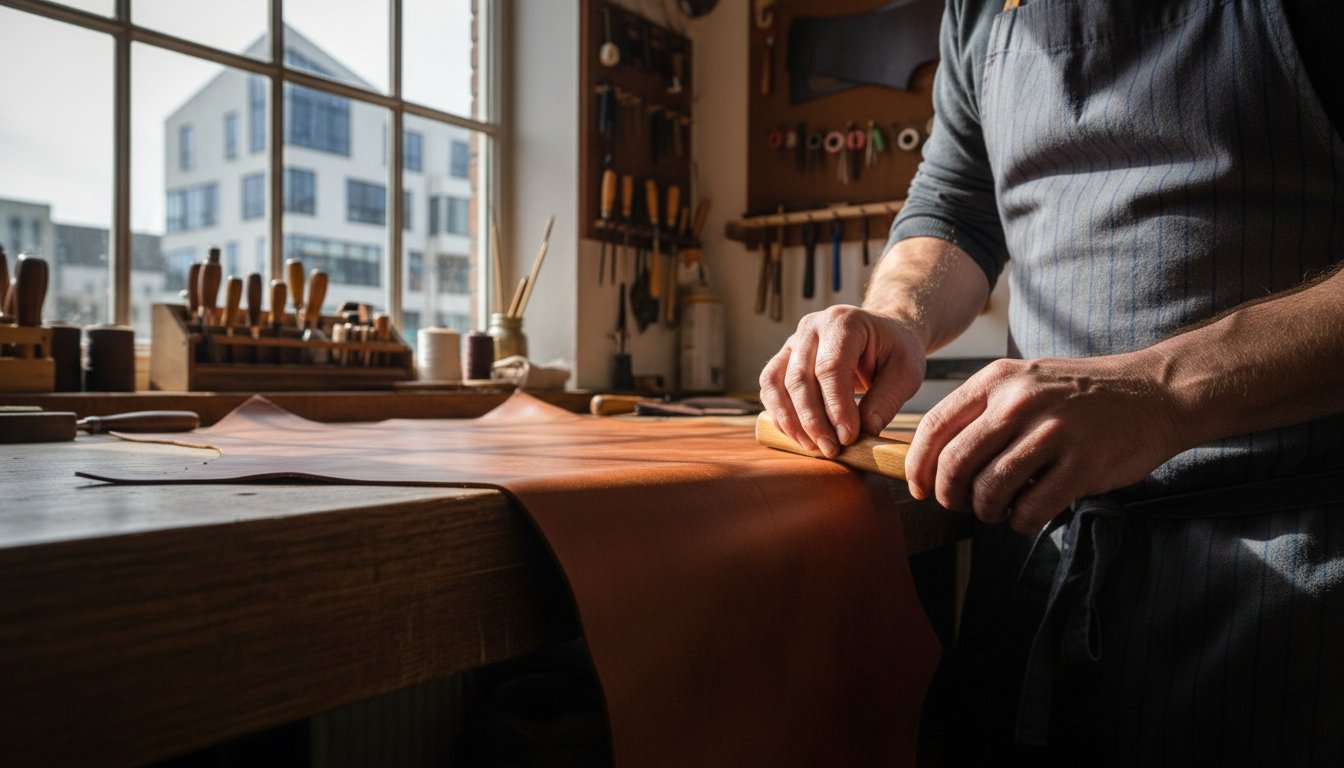
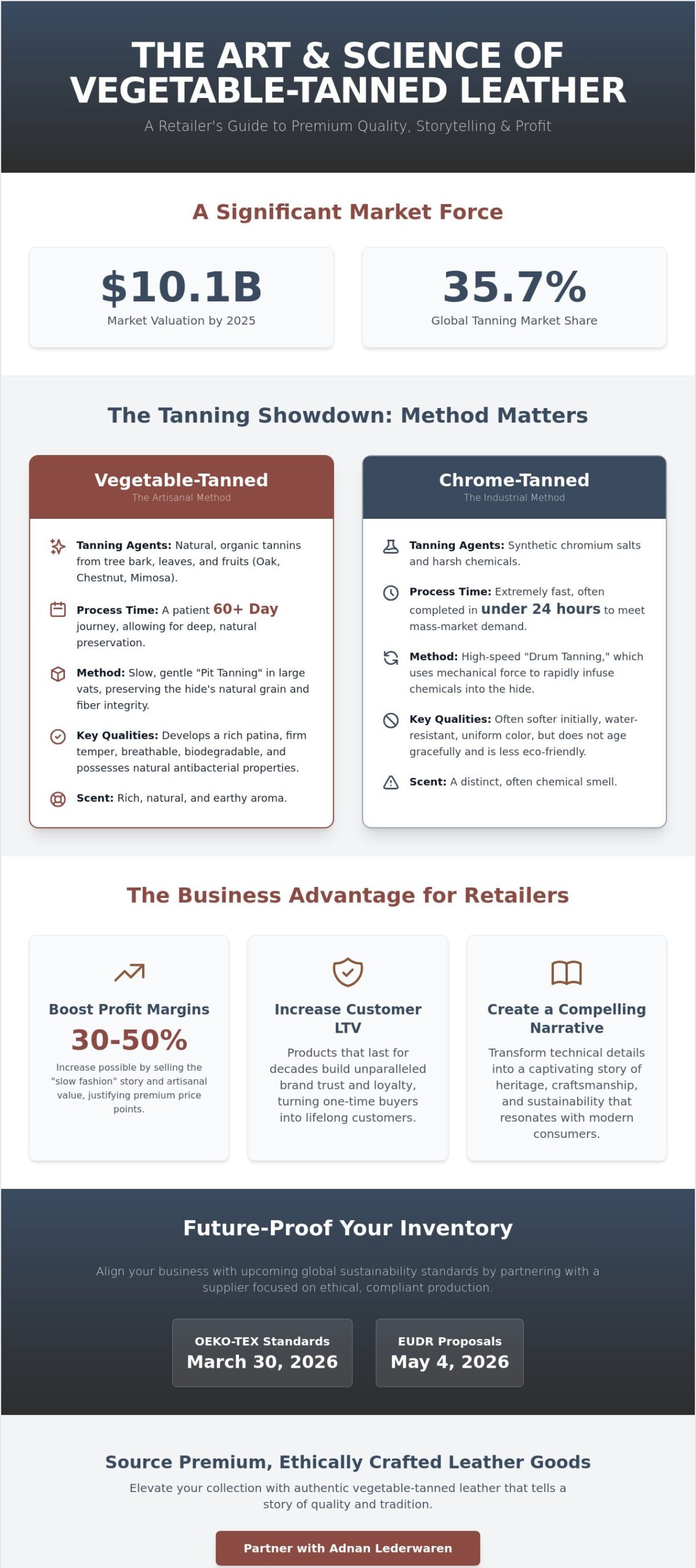
By 2025, the vegetable tanning segment reached a valuation of USD 10,126.56 million, capturing a 35.7% share of the global tanning market. Despite this surge in demand, many retailers still struggle when a client asks exactly what is vegetable-tanned leather and why sell it over faster, cheaper alternatives. You’ve likely felt the challenge of justifying a premium price tag to a customer who’s wary of natural variations or unique textures. It’s difficult to sell a product’s value when you don’t have the technical story to back it up.
We’re here to help you master this craft by revealing the artisanal secrets of “Veg-Tan” leather, showing you how these traditional methods create pieces that age with a characterful patina. You’ll learn how to transform technical details into a compelling narrative that drives higher margins and builds deep customer loyalty. We’ll also examine the impact of the March 30, 2026, OEKO-TEX standards and the May 4, 2026, EUDR proposals, providing a clear framework for sourcing goods that reflect true quality and timeless class.
Understanding the essence of premium materials is vital for any retailer aiming for excellence in 2026. When we discuss What is Vegetable-Tanned Leather, we’re looking at a process that rejects chemical shortcuts in favor of organic tannins derived from tree bark, leaves, and fruits. This method is the backbone of “Slow Fashion,” a movement that has seen a significant resurgence as 2026 consumers prioritize longevity over disposable trends. For a business owner, knowing what is vegetable-tanned leather and why sell it means recognizing it as a hallmark of heritage craft that justifies its place in a high-end inventory.
This leather is distinct for its firm temper and a rich, earthy scent that synthetic alternatives simply can’t replicate. It possesses a unique ability to hold a “burnish,” where the edges and surface become smooth and glossy through friction and heat. It’s crucial to clarify for your customers that “Veg-Tan” is fundamentally different from “Vegan Leather.” While vegan options are often made from petroleum-based plastics like PU or PVC, vegetable-tanned leather is a natural, biodegradable product that develops a deep, personal character over time.
To better understand the intricate nature and value of this material, watch this helpful video:
Tannins are complex polyphenols found naturally in the plant kingdom. These organic compounds are the secret to preserving the hide without harsh chemicals. Master tanners rely on specific sources like Oak, Chestnut, Mimosa, and Quebracho bark to achieve different shades and textures. In this traditional process, tannins physically replace the water molecules within the hide’s collagen fibers to prevent natural decay and ensure the leather remains stable for decades.
The roots of this craft reach back to ancient Egyptians and Greeks, who discovered that plant extracts could turn raw hides into durable armor and footwear. The Industrial Revolution nearly erased this knowledge as the industry shifted toward high-speed chrome tanning to meet mass-market demands. By May 2026, we see a powerful shift back to these origins. Modern luxury houses are increasingly featuring vegetable-tanned pieces in their collections, choosing authenticity over speed to satisfy a market that values the story behind the product.
Time is the most expensive ingredient in the production of high-end leather. While industrial chrome tanning can process a hide in under 24 hours, the traditional vegetable tanning method requires a minimum of 60 days. This 20-fold increase in production time isn’t a sign of inefficiency; it’s the only way to achieve the density and durability that discerning clients expect in 2026. When you consider what is vegetable-tanned leather and why sell it, you must look at the physical transformation of the fibers. The slow, patient absorption of plant extracts creates a material that doesn’t just look better, it performs better over a lifetime.
The heart of this process is the “Pit Tanning” method. In these traditional tanneries, hides are suspended in deep vats filled with natural liquors. Unlike modern drum tanning which uses mechanical force to rush chemicals into the skin, pit tanning relies on gravity and time. This gentle approach preserves the integrity of the grain. Scientific studies from sources like Qucosa have detailed the antibacterial properties of vegetable-tanned leather. This natural resistance to bacteria is a significant selling point for items like wallets and handbags that are handled constantly.
The journey begins in the beamhouse, where hides are soaked and unhaired using lime. We avoid harsh acids to ensure the natural structure remains intact. Next, the hides move through a series of tanning vats with increasing concentrations of tannins. This gradual immersion ensures the organic compounds reach the very center of the hide. Finally, we perform fatliquoring, where master craftsmen restore essential oils and waxes to the leather. This step is what gives our leather backpacks and duffel bags their signature suppleness and characterful feel.
Maintaining consistency in a 60-day process requires constant vigilance. Master tanners must account for environmental shifts in humidity and temperature, which can alter how the leather accepts dyes and oils. They check for “full penetration” by inspecting the cross-section of the hide to ensure the tannins have saturated every fiber. This level of scrutiny is why choosing the right partner is critical. For a deeper look at these standards, see our guide on how to choose a leather goods manufacturer to ensure your inventory meets the highest B2B benchmarks.
Retailers often face a dilemma: choose the speed of industrial production or the integrity of tradition. Chrome tanning accounts for 64% of the global market because it’s fast, finishing a hide in just 24 hours. But for a business aiming for the premium sector, understanding what is vegetable-tanned leather and why sell it is essential. Chrome leather relies on heavy metal salts that can eventually lead to peeling and cracking as the chemical bonds break down. Vegetable-tanned leather, however, relies on a 60-day organic process that creates a dense, fibrous structure. This structure doesn’t just last; it improves. While chrome leather wears out, veg-tan leather wears in.
The visual evolution of these materials sets them apart. Chrome-tanned leather stays exactly the same until it eventually fails, often looking “plastic” or synthetic. Vegetable-tanned leather is alive. It absorbs the oils from a user’s hands, sunlight, and even the environment to develop a rich, dark patina. Organizations like The Genuine Italian Vegetable-Tanned Leather Consortium have spent decades protecting this heritage, ensuring that every hide tells a story that mass-produced chrome leather cannot match. This unique aging process transforms a simple accessory into a personal heirloom.
By June 1, 2026, new OEKO-TEX standards will tighten limits on hazardous substances, making the shift away from Chromium salts even more critical for your ESG goals. Chrome tanning often involves Chromium III, which can oxidize into the toxic Chromium VI if not managed perfectly. Vegetable tanning uses organic plant extracts, resulting in a biodegradable material that returns to the earth without leaving a trail of heavy metals. For brands looking to align with the May 4, 2026, EUDR proposals, offering these natural goods is a transparent way to prove environmental responsibility and meet the demands of the 2026 eco-conscious consumer.
Daily use reveals the true strength of this material. Vegetable-tanned leather is naturally breathable and hypoallergenic, making it the superior choice for items that have constant skin contact, like our leather handbags or belts. It also possesses a remarkable “self-healing” quality. Unlike the permanent scars found on plastic-coated leathers, small scratches on a high-quality veg-tan surface can often be buffed out with just the warmth of a thumb and a bit of leather cream. This resilience ensures that a leather backpack or wallet isn’t just a seasonal purchase, but a lifelong companion for your customers.
Stocking a full range of vegetable-tanned goods is a strategic pivot for retailers facing a saturated market. While competitors fight over price points for mass-produced items, your business can capture the growing segment of shoppers who value substance. By 2026, the global leather goods market is projected to reach USD 566.23 billion. Capturing even a small portion of this growth requires a distinct value proposition. When you understand what is vegetable-tanned leather and why sell it, you stop selling a commodity and start selling an investment piece.
One of the most compelling reasons for this shift is the margin potential. Industry data suggests customers are often willing to pay a 30-50% premium for products with a documented artisanal story. This isn’t just about the material; it’s about the 60-day journey from raw hide to finished piece. This narrative justifies the higher wholesale cost and allows for healthier retail markups. These products create brand advocates. A leather backpack that remains functional and beautiful for 20 years is a silent billboard for your shop’s commitment to quality.
The natural patina serves as a powerful, free marketing tool. Encourage your customers to share photos of their aged wallets or handbags on social media. This user-generated content showcases the “living” nature of the leather and proves its durability better than any traditional advertisement could. It differentiates your inventory from the “genuine leather” found in department stores, which often uses plastic fillers and thin coatings that fail within a few seasons.
To effectively move these goods, your staff needs a specific narrative. Introduce the “Cost Per Wear” concept. A premium vegetable-tanned bag might cost more upfront, but its 20-year lifespan makes it significantly cheaper per year than a low-quality alternative. Teach your team to frame “natural marks” or variations in the grain as the unique fingerprint of the animal, rather than a defect. For more specific advice on curating your collection, consult our Retailer’s Guide to Wholesale Small Leather Goods.
Stocking these goods immediately positions your business as an ethical boutique. In the 2026 market, transparency is currency. At Adnan Lederwaren, we combine traditional craftsmanship in India with rigorous Dutch quality control. This hybrid model ensures you receive high-character products that meet European standards of reliability. By choosing to source your leather goods from a trusted partner, you provide your customers with the integrity they demand while securing the margins your business needs.
Choosing the right partner is as critical as choosing the material itself. By now, you understand what is vegetable-tanned leather and why sell it to secure a loyal customer base in 2026. At Adnan Lederwaren, we bridge the gap between centuries-old Indian tanning expertise and the rigorous standards of the European market. Our commitment to B2B excellence means we don’t just provide products; we provide a foundation for your brand’s reputation. Every piece in our collection, from characterful leather handbags to sturdy leather aprons, reflects our deep passion for natural materials and artisanal pride.
Our Almere-based quality control center serves as the final gateway for every wholesale batch. We understand the fear of stocking natural products that look inconsistent. That’s why our Dutch team inspects every shipment for color uniformity, hide thickness, and hardware durability before it reaches your shelves. This dual-layered approach allows us to offer the competitive pricing of direct manufacturing with the reliability of a local European partner. Whether you’re looking for leather laptop bags or minimalist cardholders, our 2026 catalog is designed to meet the aesthetic demands of modern, conscious consumers.
We believe that premium quality should be accessible to growing boutiques and established retailers alike. To help you test the market response to “Veg-Tan” goods, we offer low minimum order quantities (MOQs) on specialty lines. For businesses looking to scale, our white-label and private-label options allow you to bring your unique brand vision to life using our high-grade full-grain leathers. If you’re planning your next collection, our Ultimate Guide to Sourcing Wholesale Leather Handbags provides deeper insights into building a profitable inventory.
Our guarantee is rooted in transparency. We check for full tannin penetration and ensure that the oils used in the finishing process are perfectly balanced for a soft, characterful feel. We pay close attention to the small details that end-consumers notice, such as the smoothness of a zipper on a leather duffel bag or the precision of the stitching on a leather RFID wallet. This meticulous focus ensures that the “story” you sell to your customers is backed by a product that truly lasts a lifetime.
Ready to elevate your inventory with the gold standard of leathercraft? We invite you to request samples from our latest collection to feel the texture and scent of our artisanal work firsthand. Contact Adnan Lederwaren for a wholesale quote today and let’s discuss how our vegetable-tanned goods can drive your business growth in 2026.
The shift toward slow fashion is no longer a niche trend; it’s a market requirement. By mastering the technical details of what is vegetable-tanned leather and why sell it, you position your brand to meet the 2026 demand for ethical transparency and high-margin durability. You’ve seen how the 60-day pit-tanning process creates a product that captured a 35.7% market share by 2025 by offering something chrome tanning cannot: a living patina and a lifespan that easily exceeds 20 years.
As B2B specialists since 2010, we’ve refined our process to bridge the gap between traditional Indian craftsmanship and Dutch quality control. We ship worldwide from our hub in Almere, NL, ensuring that every wholesale batch meets the exact specifications your discerning clients expect. This is your opportunity to differentiate your inventory with characterful, high-margin accessories that build lifelong customer loyalty. We’re ready to help you bring this timeless quality to your store shelves.
Partner with Adnan Lederwaren for Premium Wholesale Leather Goods and start building a collection that truly ages with grace. We look forward to supporting your business growth through authentic craftsmanship.
Yes, vegetable-tanned leather is 100% authentic animal hide. It represents the most traditional form of leather production, dating back thousands of years to ancient civilizations. Unlike synthetic alternatives, it maintains the natural grain and structural integrity of the original skin, making it a premium choice for high-end goods that require both strength and beauty.
The higher wholesale cost reflects the intensive 60-day production timeline required for organic tannins to saturate the hide. This process takes 20 times longer than industrial chrome tanning. Additionally, the use of rare natural extracts like oak and mimosa bark, combined with the need for highly skilled artisanal labor, increases the final value of every batch we produce.
While this leather is incredibly durable, it benefits from periodic conditioning with natural waxes or oils to maintain its suppleness. You should advise customers to avoid soaking the leather in water and to buff out surface scratches with a soft cloth. Providing these simple care tips helps reinforce the investment aspect of the purchase to your retail clients.
Yes, the leather will naturally darken and develop a unique patina as it interacts with sunlight and oils from the skin. This evolution is a primary reason why retailers ask what is vegetable-tanned leather and why sell it, as the changing character creates a deeply personal connection between the user and the product over its 20-year lifespan.
Vegetable-tanned leather is naturally water-resistant but not entirely waterproof. Because it lacks the plastic coatings found on cheaper leathers, it remains breathable and porous. If an item gets wet, it should be dried slowly at room temperature. For outdoor-heavy items like backpacks, applying a beeswax-based protector can significantly enhance its moisture-repelling capabilities.
Yes, we offer custom dyeing options for our B2B partners, though the palette typically leans toward rich, earthy tones. Because we use natural tannins and hand-dyeing techniques, the colors have more depth and variation than the flat, uniform shades of mass-produced goods. This allows your brand to offer a bespoke look that emphasizes the material’s organic origins.
The primary difference lies in the source material and environmental impact. Vegetable-tanned leather is a biodegradable animal byproduct, while most vegan leathers are petroleum-based plastics like PU or PVC. Understanding what is vegetable-tanned leather and why sell it helps you explain to customers that Veg-Tan is a natural heritage product, whereas many vegan alternatives release microplastics and cannot biodegrade.


You deal directly with the manufacturer. We control planning, quality and pricing ourselves.

One point of contact from first question to delivery. English, Dutch and German.

Approve a physical sample first. We are happy to sign your NDA.

Incoming leather, after cutting, during production, and a final inspection before dispatch.
 English English
 Nederlands
 Deutsch
 Français
 Italiano
 Español
Comments are closed.